
As a mum who has travelled extensively with young children, Elisa Elwin shares her honest take on why holidays with babies and toddlers can feel so hard — and the practical things that can finally make them feel like a real break.
As a mum of two who has travelled extensively with my daughters — often solo on long-haul flights to visit family overseas — I know the “pre-travel jitters” all too well. I’ve lived through the frantic packing, the public transport marathons with a pram in tow, and the desperate search for a new rhythm in a completely different time zone.
The journey was always challenging. I used to think that “holiday with a toddler” was just an oxymoron. Was it really a break, or just the same relentless work in a different, less-equipped location?
Recently, though, I discovered something that genuinely shifted my experience. A stay at Paradise Resort Gold Coast introduced me to a level of family support I hadn’t experienced before — particularly for babies and toddlers. Here’s what I’ve learned about making holidays with little ones actually work.

1. Is a holiday with little ones even a reality?
We’ve all seen the social-media version of family travel: sun-drenched toddlers playing quietly in the sand while parents relax nearby. The reality is often very different. Travelling with babies and toddlers usually means parenting without your support network — no grandparents, no familiar routines, no trusted shortcuts.
Without the high chair, the familiar cot or the extra pair of hands, the exhaustion can double. That’s why so many parents come home more tired than when they left. For a holiday to be a reality — and not just a relocation of labour — expectations have to shift.

2. It’s not just the destination — it’s the infrastructure
To make it a holiday for everyone — parents, older siblings and tiny tots — you need to stop being the only person “on duty.” That requires more than a beautiful location; it requires infrastructure that understands families.
The right accommodation, the right layout, and services designed specifically for children at different stages can completely change how a trip feels. When the destination supports your family correctly, the mental load lifts almost instantly.

3. What do parents need to really relax?
In my experience, parents need three things to exhale: safety, proximity, and a truly genuine break.
True relaxation only happens when you stop scanning for hazards. You need a home base with real floor space for crawlers and an environment that understands the “split-family” dynamic—where older kids have energy to burn while babies follow their own rhythm.
Even a short, reliable break can reset everything.

4. Childcare and Kids’ Clubs: Can you really trust a stranger?
This is the biggest emotional hurdle for any parent. Leaving your precious bundle with someone you don’t know feels extraordinary, and the questions are always the same: Will they know her bottle routine? Can they handle his tantrums? Is it actually safe?
In my years of travel, I’ve learned that true peace of mind doesn’t come from just “babysitting” — it comes from professional standards. You aren’t looking for a sitter; you’re looking for a licensed facility with qualified, caring staff who understand that an 18-month-old has vastly different needs than a seven-year-old.

5. Why the Paradise Resort Kids’ Club is an Australian game-changer
While a handful of other Australian resorts mention care for the 0–3 age group, there is almost always a catch: a parent or carer must remain present, or the service operates only during limited school holiday sessions.
Paradise Resort Gold Coast has completely changed the landscape as the only resort in Australia to offer a brand-new, dedicated Tiny Tots room within a fully licensed Kids’ Club, where parents can leave their little ones.
It is a bespoke, quiet sanctuary designed as a nursery-grade environment, ensuring that the “precious cargo” you hand over is treated with the highest level of professional care.

6. The only “true” holiday for parents in Australia
The real “Golden Ticket” at Paradise Resort — and the feature that truly separates it from any other Australian Resort — is the genuine freedom it gives parents.
When you book a dedicated three-hour session in the Tiny Tots room, the “work” of the holiday officially stops. Your little one is settled in a calm, nursery-grade environment with specialised staff, and you’re free to step away with genuine peace of mind.
Whether that time is spent resting, reconnecting with an older child, or simply enjoying a moment without multitasking, it’s the shift from parenting somewhere else to actually being on holiday. Even a short break can completely change how the rest of the trip feels.

Why Paradise Resort Gold Coast Works So Well for Families
Designed for families — not just kids
Paradise Resort Gold Coast isn’t just kid-friendly — it’s parent-aware. The resort is designed to reduce friction at every stage of the day, from pram-friendly layouts to accommodation with genuine family space, so parents aren’t constantly problem-solving.
Freedom without guilt
Booking a three-hour session in the Tiny Tots room and confidently leaving your baby or toddler in expert care transforms your whole holiday experience. You don’t have to stay in the room or hover nearby. You can step away knowing they are safe, settled, and supported.
That freedom isn’t about doing more; it’s about recharging so you can return present, patient, and energised.
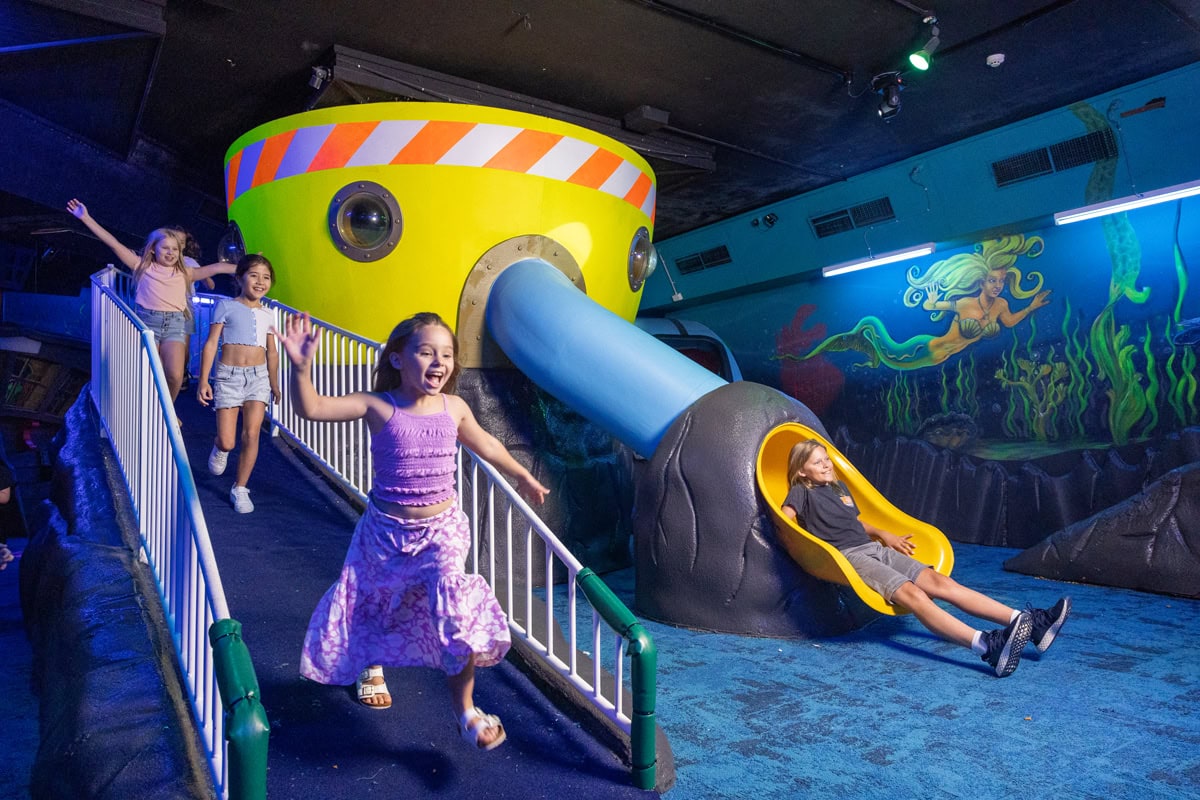
Big adventures for bigger kids: The Explorers Club
Many families travel with more than one age group, and this is where Paradise Resort truly excels.
In addition to the Tiny Tots room, the resort also offers the Explorers Club (for ages 4 to 12. This action-packed kids’ club is designed specifically for older children. With supervised activities, themed sessions, and high-energy fun tailored for this age group, it ensures that bigger kids are just as engaged and excited about their holiday as their younger siblings.
Baby & toddler travel tips
What to pack
Travelling with a baby doesn’t mean taking everything — it means taking the right things. Prioritise sleep essentials (familiar sleep sack, comforter, white noise), feeding basics, medications, and a small “emergency kit” for flights or car trips. Most destinations have supermarkets. The goal isn’t perfection — it’s confidence that you can handle the unexpected.
Sleeping in a new environment
Sleep disruptions are inevitable — but manageable. Try to recreate familiar cues: same bedtime routine, same comfort item, same wind-down sequence. Don’t overschedule big activities on arrival day. Blackout blinds, portable white noise and a predictable wind-down ritual can make the difference between chaos and calm in a new space.
Feeding on the go
Whether you’re breastfeeding, bottle-feeding or navigating toddler snacks, feeding logistics can dominate travel. Research access to supermarkets and pharmacies ahead of time. Pack more snacks than you think you’ll need. Familiar foods help anchor little ones when everything else feels new.


